
Moleaer Nanobubbles doubled oxygen efficiency for Rostein’s well-boat
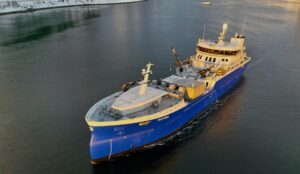
Rostein, one of the world’s largest well-boat operators, tested Moleaer nanobubble technology to meet oxygen demand and ensure fish welfare during fish transportation and loading. Three nanobubble generators were used for oxygenation, while the fourth one served as a backup or for ozonation purposes. This set up was compared to another vessel using 3 Venturi injectors.
Doubled Oxygen Transfer Efficiency: Nanobubbles vs. Venturi Injectors
When comparing both systems, the Moleaer nanobubble generator achieved an average oxygen transfer efficiency (OTE) of 86%, significantly higher than the 41% recorded for the venturi injectors. This resulted in an additional oxygenation capacity of 22 kilograms per hour compared to the injectors when both systems are operated at the same total oxygen mass flow rate of 45 ± 5 kilograms per hour (15 kg O2/hr per unit). This means that Moleaer’s technology achieved approximately twice the transfer efficiency of the compared venturi injectors.
What Rostein says:
“We have tested and documented the Nanobubble technology from Moleaer on one of our vessels. It provides faster and better control of the O2 environment in the cargo holds during operation. This technology is a huge step forward for our industry.” Joar Sandøy, Project Manager – Rostein AS
Potential Cost Savings and Increased Loading Capacity
The increase in oxygenation capacity provided by integrating Moleaer nanobubbles translates into significant cost savings, reduced fuel consumption, lower carbon emissions, or the ability to increase fish loading capacity while maintaining welfare standards.
If the Moleaer equipment is operated to meet the same oxygen demand as the venturi injectors, estimated oxygen range between 230 and 360 tons per year. This corresponds to approximately 60 to 100 tons of diesel saved annually and a reduction of 130 to 200 tons of greenhouse gas (GHG) emissions (CO2 + NOx). These efficiencies result in potential annual cost savings of up to 80,000 euros in diesel – with 2025 fuel prices, plus an additional 14,000 euros in potential tax rebates from NOx funds due to reduced emissions.
Alternatively, if the Moleaer system is operated to maintain the same oxygen consumption as the injectors, the results indicate that replacing the venturi injectors with Trinity L2s nanobubble generators would optimize stocking density and capacity until the maximum allowed by the industry regulations – without compromising fish welfare during normal transport conditions.
Dual-Function Use: Oxygenation and Ozone Injection
Following this comparison, Rostein began using all onboard nanobobble generators for effective ozone transfer efficiency in addition to oxygenation.