Innovation Theatre Programme - Day 2
NEW for 2024; Don’t miss the Innovation Theatre. Discover groundbreaking advancements in digitalisation and genetics from international experts that are revolutionising the way we farm seafood.
These 30 minute presentations will take place take place just outside the main exhibition hall, and are free to attend for all.
The transformative potential of genetic technologies in aquaculture
Genetic improvement of aquaculture species via well-managed selective breeding is a cornerstone of sustainable aquaculture, offering cumulative and permanent improvements in production and welfare traits. This presentation will give an overview of the state-of-the-art in aquaculture breeding, highlighting examples of how genetic technologies are delivering major benefits to the industry. The presentation will also highlight ongoing research and development programs at Benchmark aimed towards the next generation of technologies – including sterility and gene editing – and their potential for transformative impacts to improve health, welfare, and efficiency of aquaculture production.
What are the benefits of the innovation being showcased?
The benefits of these innovations in genetic technologies are sustainable improvements in production performance, as well as in health and welfare of farmed aquatic species.
SPEAKER: Ross Houston, Director of Genetics and Innovation, Benchmark Genetics


AI and Technology in Aquaculture - Past, Present and Future
This presentation aims to provide an insightful exploration of the evolution of artificial intelligence (AI) and technology in aquaculture, with a particular emphasis on understanding Umitron’s role as a key player in shaping the industry’s future through innovative technological solutions. Commencing with a broad overview of historical milestones, we delve into the challenges that have shaped the industry’s past and the early technological advancements that have laid the groundwork for its development.
Transitioning to the present, the narrative shifts to the current integration of big data, AI, and the Internet of Things (IoT) within aquaculture. A central aspect of this exploration is the examination of Umitron’s contributions, specifically its precision-feeding AI and satellite monitoring solutions. These real-world applications are presented as integral components within the aquaculture sector, illustrating their potential to promote sustainability, facilitate more informed decision-making and the value of data to enhance product traceability from farm to fork.
Looking ahead, the presentation discusses anticipated future trends, such as predictive modelling and advanced analytics, while underscoring how Umitron’s ongoing efforts align with and contribute to these evolving industry dynamics.
Throughout this exploration, the audience is invited to gain a deeper understanding of technology’s pivotal role in aquaculture and how Umitron’s initiatives contribute to making the sector more efficient and sustainable. The focus remains on providing informative content, allowing the audience to draw their own conclusions about the industry’s trajectory and Umitron’s role within it.
What are the benefits of the innovation being showcased?
We help farms better understand production via our technology and bespoke AI algorithms, helping them optimise feeding strategies, track fish health, and improve decision-making. The result is enhanced operations with less risk exposure, reduced environmental impact and increased traceability.
SPEAKER: Russell Ferguson, Field Sales Manager (Scotland), Umitron


Molecular Testing in Aquaculture - Solve common and complex issues with the X9 High-Throughput Genomics System
The increase in global demand for food combined with several new challenges, including climate change, emerging infectious and parasitic diseases and reduction of conventional animal feed ingredients, is shaping the way aquatic organisms are bred. To improve productivity with environmentally sustainable practices, scientists worldwide are moving to adopt advanced genomic tools to guide production of fisheries. The difficulty in implementing many genomic solutions has been finding platforms that are cost-effective, easy to implement and scalable and that provide flexible panel design so they can be used for any species or application type. Standard BioTools™, with its X9™ High-Throughput Genomics System, offers cost-effective, high-throughput and automated solutions for PCR and next-generation sequencing (NGS) workflows utilized in aquaculture.
What are the benefits of the innovation being showcased?
Versatile – Perform realtime PCR, genotyping by sequencing (GBS) and high-marker-density experiments with consistent and reproducible results.
Efficient – Reduce cost and hands-on time with walk-away automation and reaction miniaturization.
Scalable and Validated.
SPEAKER: Geoff Dance, Senior Field Applications Scientist, Genomics, Standard BioTools


Rapidly deployable real time sensors for supporting Aquaculture operations
Sofar will be presenting their all in one solution for real-time data collection at Offshore Aquaculture sites. This easy to use and rapidly deployable equipment addresses pain points within Aquaculture across the globe. Improving operational safety and informed decision making for pre-site assessments, expansions and futurity of the farm. Sofar provides data for whole life cycle operations.
What are the benefits of the innovation being showcased?
Improving operational safety and informed decision making for pre-site assessments, expansions and futurity of the farm.
SPEAKER: Jasmine Eggleton, Commercial Account Executive, Sofar Ocean


BBSRC investing in collaborative aquaculture and innovation
BBSRC will be announcing the projects being funded through the Sustainable Aquaculture Partnerships for Innovation funding call which launched in 2023. This collaborative research funding opportunity aims to build and strengthen partnerships between academia and industry and enable the co-development of innovative solutions to key environmental sustainability challenges. Projects will cover key challenge areas such as:
– environmental sustainability and climate change
– gene editing and selective breeding
– species diversification
– production and handling technologies
– waste management and valorisation
– improving the health of farmed aquatic animals in a changing climate
– nutrition and feeding.
Find out more about how BBSRC supports collaborative aquaculture research and innovation, as well as our current funding opportunities.
SPEAKER: Esther Harper, Senior Portfolio Manager - Farmed Animals, Biotechnology and Biological Sciences Research Council (BBSRC)


From Aquariums to Aquaculture: Revolutionary Technology for Cost-Effective Continuous Water Monitoring
Maximizing yield in aquaculture gives the competitive edge and monitoring critical parameters is the enabling factor. For the past 12 years, Seneye has been monitoring crucial parameters such as NH3, pH, and temperature for commercial aquaculture customers with POE-powered generation 1 sensors.
Clients include SEDNA, a leading provider of seafood product platforms; the Native Marine Centre, specialising in lumpfish hatchery; and Bantry Marine Research Station Ltd, focused on multi-species aquaculture research. Through collaboration with our clients, a need has arisen for a cost-effective, multi-parameter, remote, and robust solution. Enter Seneye’s Gen2 device that leverages the same optical patented technology as its predecessors but innovatively incorporates a host of additional features. With just one disk, this device can monitor six parameters: pH, low NH3 (0.001ppm – 0.05ppm), high NH3 (0.5ppm – 10ppm), temperature, turbidity, and conductivity, with provisions for additional channels. Traditionally, Ion-selective electrodes (ISE) have been used in commercial water monitoring. However, these methods don’t monitor toxic ammonia, are susceptible to drift, necessitate recalibration every two weeks and annual replacement. Moreover, accuracy issues persist, including the need for constant ionic strength and vulnerability to chemical interferences.
Seneye’s spectrometry-based optical sensor engine offers a unique solution by harnessing full-colour space data. Seneye’s Gen2 device boasts a lifespan of up to two months between disk changes, surpassing traditional ISE probes by eliminating the need for wet calibration.
The primary strength of Seneye’s Gen2 lies in its cost-effectiveness. Compared to other water monitoring solutions, it comes at a fraction of the price, priced at £500 whereas most alternatives range between £5000 to £18000. Additionally, Seneye is working on implementing a drift detection algorithm using real-world data, which would enable on-demand maintenance, further minimising operational overheads.
Data collected is stored in a cloud-based system and can be customised to suit different formats, meeting the specific needs of each client.
What are the benefits of the innovation being showcased?
Seneye’s Gen 2 monitors tracks 6+ parameters simultaneously remotely. Its optical sensing ensures accuracy and avoids drift whilst maintaining a 2-month disk lifespan. The seamless integration with data platforms enables tailored solutions and all for £500.
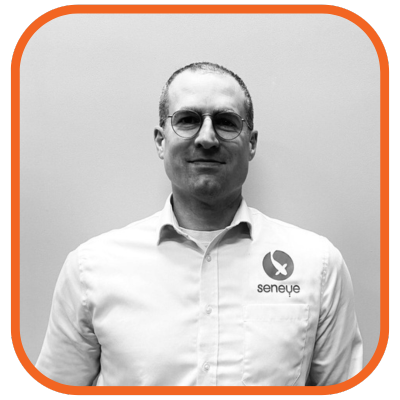
SPEAKER: Matt Stevenson, CEO, Seneye LTD
Floating solar power plants - decarbonizing fish farming
Inseanergy Solar Hybrid is an innovative solution that harnesses renewable solar energy. Designed to complement existing power sources like land-based electricity or fossil fuels (such as diesel generators), this system offers sustainable energy for various applications.
Since its inception in 2020, Inseanergy has developed and rigorously tested a floating energy system based on cutting-edge solar cell technology. This system can be seamlessly integrated into aquaculture facilities, specifically fish farms, and easily connected to the existing energy infrastructure on feed barges.
Key features of the Inseanergy Solar Hybrid :
1. Renewable Energy Harvesting: The system captures solar energy, reducing reliance on traditional power sources and promoting environmental sustainability.
2. Integration with Existing Infrastructure: Inseanergy Solar Hybrid can be fully integrated into fish farm operations. It utilizes floating rings (repurposed from fish farming) equipped with solar panels. These floating solar power plants can be moored independently or within existing cage structures.
3. Patented Solar Cell Technology: Inseanergy employs Ocean Sun’s patented solar cell technology, ensuring efficient energy conversion and reliable performance.
In summary, Inseanergy Solar Hybrid represents a forward-thinking approach to decentralized sustainable energy production in aquaculture, benefiting both the environment and fish farm operators.
SPEAKER: Jan Erik Våge Klepp, Business Development Executive & Founder, Inseanergy AS