
Monthly Round-up by Jenny Hjul – July 2025
 Trump’s tariffs, the latest US trade deals, and the seafood industry’s moves to counter the disruption dominate a far from quiet summer season, writes Jenny Hjul in this month’s round-up of industry news
Donald Trump’s trade tariffs continue to monopolise the seafood news agenda, with a number of deals being struck ahead of his August 1 deadline for implementing punitive rates.
At a meeting between European Commission president Ursula von der Leyen and the US president, which took place on July 27 at Trump’s Turnberry golf resort in Scotland, the EU and US agreed a 15 per cent tariff on most EU exports to the US, including seafood.
While lower than the 30 per cent tariff previously threatened by Trump, the rate is significantly higher than the 4.8 per cent average that applied prior to this administration, Salmon Business reported.
The US imported 360,474 tonnes of seafood worth $1.4 billion from the EU in 2024, with fresh salmon fillets, smoked salmon fillets, and frozen salmon fillets the top imports.
The deal was welcomed in Norway, which although not in the EU sends much of its salmon to countries like Poland, Denmark and the Netherlands for processing, reported Fish Farmer.
Norway’s Foreign Minister Espen Barth Eide said: ‘It is good that the parties have reached an agreement on strengthened cooperation. Norwegian business is closely integrated into European value chains, and may be indirectly affected by high tariffs on goods from the EU to the US.’
Trade barriers did not seem to dent Norwegian seafood exports in the first half of 2025, which saw a record 1.3 million tonnes exported with a total value of NOK 85 billion (£6.23 billion), according to the Norwegian Seafood Council.
Salmon remained the single highest export earner, with a total of 609,946 tonnes generating NOK 57.8 billion (£4.3 billion) in revenue, a year-on-year increase of three per cent in value and 22 per cent in volume.
Aquaculture faces a volatile outlook in the second half of the year, predicted Rabobank, but global salmon production is projected to expand.
Scottish salmon producers are focusing on their European markets following a recent UK-EU trade deal and also to counter efforts by other exporters to switch sales from the US to Europe.
A £100,000 campaign to boost sales of Label Rouge Scottish salmon in France and other key European markets was announced in July, with the Scottish government and Salmon Scotland each contributing £50,000.
France accounts for more than half of all Scottish salmon exports, with sales of £462 million in 2024. About a third of Scottish salmon exports to France carry the Label Rouge mark, awarded over 30 years ago for superior quality, Fish Farming Expert reported.
Tunnel vision
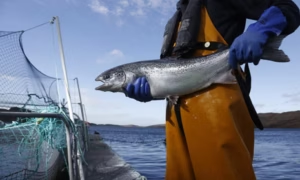
In Shetland, which produces around a quarter of all Scottish salmon, the salmon sector is throwing its weight behind a proposal to introduce a Faroese style tunnel network to improve logistics and reduce transport costs and delays.
The Shetland Islands Council is carrying out a consultation to explore tunnel connections to the four outer islands of Unst, Yell, Bressay and Whalsay, in a move that could prove ‘incredibly transformational’, said council leader Emma Macdonald.
In other news this month, research conducted by the Institute of Marine Research (IMR) in Norway has found limited disease transmission from salmon farms to wild salmon. The authors said their findings align with previous data, indicating minimal pathogen impact from aquaculture activities on wild salmon populations.
Meanwhile, a major academic review in Canada, published in July, also challenged the misconception that salmon farming poses a long-term threat to wild salmon stocks.
Reviewing more than 20 years of data, the paper – ‘Pathogens from Salmon Aquaculture in Relation to Conservation of Wild Pacific Salmon in Canada: An Alternative Perspective’ – argues that many studies used to justify farm removals failed to account for background pathogen presence in wild populations, lacked evidence of disease causation, or employed modelling approaches without adequate biological validation.
The authors insist that ‘removing open net pen salmon farms will have no detectable effect on wild Pacific salmon population productivity’.
The review, which was not funded by the salmon industry, comes as salmon farmers in British Columbia hope to overturn a ban on open net pen farming due to come into force in mid-2029, inflicted on the sector by the previous Liberal prime minister, Justin Trudeau.
One of the biggest operators in the region, Cermaq – which has just signed a deal to buy Grieg Seafood’s salmon farms in BC, as well as in Newfoundland and northern Norway – is confident the new federal government will revoke the unscientific ban on salmon farms in the province.
Cermaq chief executive Steven Rafferty told Fish Farming Expert ‘we believe common sense will prevail’ under the new government of Mark Carney.
‘We’re dealing with food supply and employment in very remote areas, and we believe there will be a change in strategy by the government over time,’ said Rafferty.
‘We’re showing commitment to the employees of both Cermaq and Grieg that we don’t think this is over.’
 Challenge in Chile
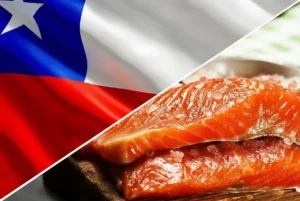
Chilean salmon farmers are also lobbying politicians to support their sector, ahead of the country’s presidential election in November.
At a summit in the salmon producing Los Lagos region organised by trade body SalmonChile, the three leading presidential candidates outlined their plans for the future of the country’s salmon farming industry.
SalmonChile president Arturo Clément said Chile had squandered its competitive advantage due to a lack of vision, and he called for a change of focus, less on creating regulatory hurdles and more on enabling sustainable expansion.
Globally, aquaculture expansion is critical to food security and rural employment, according to a new report by the World Bank and the World Wildlife Fund.
Aquaculture now accounts for nearly 60 per cent of global seafood production and has the lowest greenhouse gas emissions among animal protein sectors, Salmon Business reported.
‘Aquaculture is among the most sustainable ways to produce animal protein and will be essential in feeding the world’s growing population… It’s critical that we guide this growth through sustainable and responsible production practices,’ said Sergio Nates, senior director for Aquaculture at WWF.
In August, aquaculture professionals from around the world will gather in Trondheim in Norway for the biennial Aqua Nor exhibition, held from August 19-21. The event is expected to bring together more than 600 exhibitors representing some 70 countries, and will include the announcement of the prestigious Aqua Nor Innovation Award.
For a round-up of the show highlights and to keep up to date with the industry’s top stories, don’t miss the next Aquabuzz news review.