Young Leaders in Aquaculture – Andre Van, Kames Fish Farm
This feature is part of our new series highlighting Young Leaders in Aquaculture. It follows the day to day life of those in the earlier part of their careers and offers inspiration and advice for getting into the Aquaculture industry.
Tell us a bit about your background before joining Kames Fish Farming..
Growing up in western Canada, I was blessed to be surrounded by lots of stunning lakes and mountainous (rain)forests. Because of this, I have always been fascinated by aquatic life and the natural world. I went to study Human Genetics at the University College of London but realised I didn’t have much passion for a full-time career in a lab. I decided would merge my two passions of fish and science, to pursue a PhD in trout immunology in Scotland. After I graduated from the Institute of Aquaculture – University of Stirling, I found myself joining Kames in a Knowledge Transfer Partnership collaborating with the University of the West of Scotland for three years. Now I am full-time with Kames as the fish health manager.
 Who or what inspires/motivates you in life?
Leaving something behind that was never there before, whether that be new knowledge, an innovation, or a tool that raises the bar a little bit higher.
Is there such a thing as a typical day for you? What would it look like?
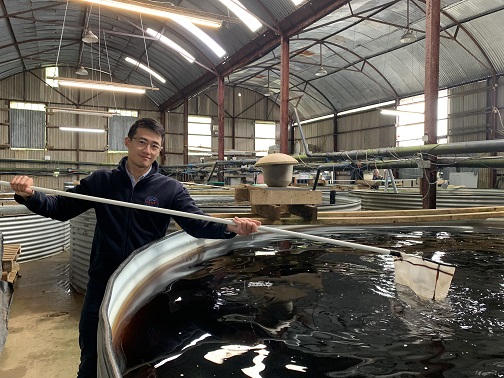
There isn’t really a typical day in fish farming, but when you take a step back, you can see that there are typical activities within a year or production cycle. There are key moments within the production cycle such as fish movements, grading, or health challenges that you can normally expect. When I started at Kames, I would often be involved in these operations, but as my role becomes more desk-based, I would now spend typically 30-40% of my time on farm visits.
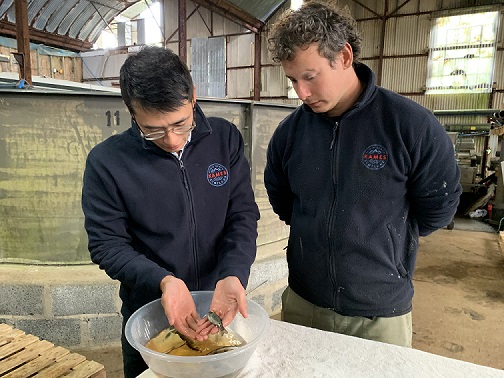
Some days I would drive to visit farm sites to perform routine fish health examinations, or respond to a call out from a health challenge. There, I would sample fish and take biological samples for further diagnosis that we can sometimes perform in-house or be sent away to be analysed. Additionally, I spend a lot of time speaking to our farm managers and vet to come up with long-term solutions with to our old and new challenges, and this involves making data-informed decisions.
What’s the best part about your job?
There are so many things I like about the job, it’s hard to say one thing. If I had to choose, I would say: being able to ride the line between academia and industry, as I like to leverage my position in a production company to support knowledge development, transfer, or innovation where and when I can.
To list a few others, I like how there’s never a dull period, I really enjoy the team that I work with, I like being outdoors, and to be able to work in nature. The breadth of animals you may see is amazing, you can get dolphins, sea eagles, and sometimes turtles.
 What are some of the challenges you face?
Coming from academia, I’m accustomed to controlling variables when doing a trial or looking at data, but you need to accept that is unlikely in a commercial environment. You can often have a perfect plan, but it will change due to the demands of production. In instance, you may need to intervene with a trial as the fish needs to be moved or harvested.
Also, trying to balance the expectations of producers and academics can be sometimes challenging. Working in a fish health role, you require a lot of time in the office or lab to prepare and plan things that farmers sometimes don’t fully appreciate, and they can become impatient. On the other hand, academics can sometimes have difficulty managing the speed and volatility of working with production.
Lastly, with the industry so focused on salmon farming, trout producers sometimes lack the access to the tools that are available to salmon producers, such as the use of cleaner fish for sea lice management, or the same range of pharmaceuticals.
If you weren’t in this role, what job would you be doing?
It’s hard to imagine what else I would be doing, but I would probably be developing some tools that would support the industry, or be working for the department of Fisheries and Oceans Canada. Either way it will be something related to fish!
What do you do for fun?
I love to ride bikes and go fishing. Living on the west coast, it really helps if you have outdoorsy hobbies. Being involved in the cycling community lets me make new friends, and keep healthy outside of work; while fishing gives me time to unplug and be in nature.
What has been the highlight of your career so far?
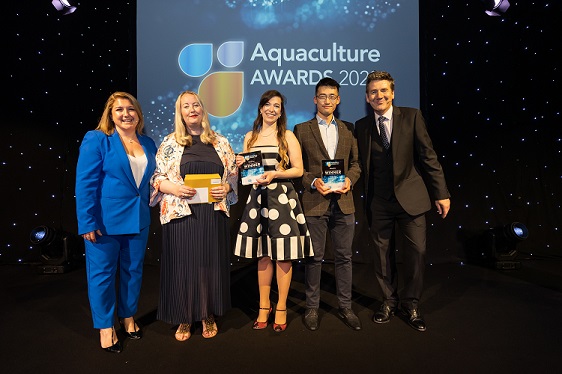
I would have to say the first half of 2022 at the Aquaculture UK awards ceremony where I won the rising star and Kames to win best aquaculture company award! Its great to be recognised for the work we are doing. We sometimes feel that the trout producers are usually an afterthought, but it means a lot to us for a smaller trout producer to have acknowledgement for our hard work.
What advice would you give to someone starting out in the industry?
Whether that be in production, a support role, pharmaceuticals, feed production or fish health, you should try to experience many facets of the industry to gain a holistic picture of how everything works together. Then, you are best placed to think of sectors that you enjoy to work in, and ways that you can improve and develop the industry.
Also, it is important to understand that production plans change so frequently, you need to be good at adapting to a new plan or situation!